Showing posts with label homeschool. Show all posts

Wednesday, November 17, 2021

Practice Monkeys (A Homeschool Crew Review)

  DISCLAIMER:  I received this complimentary product through the Homeschool Review Crew


Sadly, this is my last official review as a member of the Homeschool Review Crew but if there was any  review to go out on, this would be it.  This is a product that we have really enjoyed with our kids.  For the last few months, we have been doing music instruction in our home with Practice Monkeys, an online music instruction program that offers violin, piano, cello, guitar and even offers a self defense course. 


About Practice Monkeys

Practice Monkeys is a browser based source for all ages to learn how to play musical instruments as well as an available self defense course.  Using the Suzuki method of learning, the website is the work of veteran violin teacher Mrs Van Kleeck,. The website offers both Live group classes as well as recorded lessons that help students master their instrument and subscriptions allow students access to both live and recorded classes each week.

 Classes offered are:

  • Violin Classes through Book 7 Suzuki
  • Piano Classes through Book 3 Suzuki (Books 4–7 are in development)
  • Guitar through Suzuki Book 2 (Books 3–7 are in development)
  • Cello through Suzuki Book 3 (Books 4–7 are in development) 
  • Self Defense (Not Suzuki based)

The live classes are streamed four times each week in early afternoons while the recorded classes are available from the website 24/7 and can be accessed at the students convenience.


The website is well organized and easy to navigate.  After enrolling and being granted access to the appropriate level lessons for your student, parents will find a treasure trove of information, mostly in the form of very concise videos, such as how to tune the instrument before each practice, demonstrations of the skills the student will be working on, how the parents can help the student throughout the process and how often the student will need to work with the instrument.  Along with these videos, the weeks four previously recorded lessons are also accessible as well as PDF downloads for practice sheets and skills checkoff lists for the level your student is working at.


The subscription price is considered a family price and you pay for the instrument rather than the student.  This means that if you have two students who both on the violin, you would only pay the one price for both students.  Also, Assessments for progression to the next level is a separate purchase and would be per student.

Live classes allow your child to interact in real time with their instructor. By using the computers camera and microphone, the instructor is able to see and listen to the students during the class time and make suggestions, corrections or praise the student during their class time.

Our Experience

For this review, we enrolled Garrett in the violin course and Ashleigh was enrolled in Piano.  


The first step of their journey was a one on one assessment with Mrs Van Kleeck.  This assessment was simple to schedule thru the website and allowed for both kids to interact with Mrs Van Kleeck and allow her to see where they stood with as far as experience and knowledge of their instruments.  The assessment was on a Saturday morning and took roughly 15 minutes per child. I found this assessment to be a great starting point for the kids as it allowed them to also understand what to expect out of the classes.  Mrs Van Kleeck did a great job explaining to the kids what the kids would be expected to learn for each level they would be working at.  At the conclusion of the assessment, Garrett was placed in Violin 3 while Ashleigh was placed in Violin 1. (Note: Ashleigh was offered the opportunity to be placed in Piano 2, but she chose to be placed in the lower class). 

Once the kids had each been placed in their levels, we were able to access the "Treehouse" for those classes.  The Treehouse has all the information for the course available for the student and parent.  There were instructional videos that introduced the kids to the different music pieces that they would be working on which really helped them to understand the various techniques these pieces used.  These videos were especially useful when it came to Garrett, who could quickly pick up a piece of music but didn't necessarily play it using the technique.  Having access to these videos allowed for us to go back after Garrett had a good understanding of the notes for the piece and then focus on the technique he needed to be using.   The Treehouse also contained a checklist of what skills they would need to master in order to know when they would need a new assessment to progress to the next level, as well as the schedule for live classes and links for previously recorded classes.  


That Monday, we were ready for live classes.  These classes are conducted via Zoom, last roughly 15 minutes each, and included all students from that level who logged in that day.  Students are expected to attend either a live class or view a previously recorded class, and then practice on their own for another 15 minutes on their own after the class.  During the live classes, the students receive instruction from the instructors as well as feedback on what they can do to improve.  For example - Garrett has a habit of not keeping his wrist straight while playing.  There were a few times during class that the instructor would bring this to his attention for him to correct it.  Below is a video of Garrett during class time being asked to play a piece for the class, where he is helped with an issue he was having as well as being given instruction by Mrs Van Kleeck. (Wide view for the privacy of other children in the class)


Both kids jumped into live classes enthusiastically and both found the classes enjoyable.  However, Ashleigh quickly lost interest and getting her to do classes proved to be stressful.   Garrett however, quickly picked up his instrument and jumped in both feet. 


For the majority of his time, Garrett attended live classes, occasionally if his other lessons ran late he would view a pre recorded class. These classes were taught by either Mrs Van Kleeck or another instructor, Mrs Deb Peterson.  Between the classes, the videos available on the treehouse and his practicing outside of class, he quickly picked up the music that he was expected to learn for Level 3.  After a month of classes, Garrett was told by Mrs Van Kleeck that she believed he was ready for an assessment to see if he was ready to progress to Level 4.  Scheduling this assessment was much the same process as scheduling the original placement assessment. 

For this assessment, Garrett met one on one with Mrs Van Kleeck.  He was asked to play 4 pieces of music that he had been working on, showing the proper techniques that were in the videos and taught in the classes.  Again, we found Mrs Van Kleeck very kind, friendly and encouraging and Garrett got thru his assessment no problem, which took about 15 minutes.  Mrs Van Kleeck said he was ready for Level 4 Violin and then took another 10 minutes or so showing him the music he would be learning as well as displaying a more advanced way of holding the bow and a few new techniques that he would be focusing on during Level 4, such as lifting his bow and circling it around to play a different note.  After the assessment was completed, his Dashboard in his Treehouse showed that he was now Level 4, giving him access to the videos for that Level, much the same as when he was in Level 3. 

Garrett during his Assessment with Mrs Van Kleeck

Level 4 has begun teaching things such as music theory to prepare the students to begin reading music.  So in addition to learning the pieces that are required for the level, he has also had to begin memorizing which notes are on each scale played per string, ect.  For example - the G Major scale on his first string consists of 8 notes - G A B C D and F#  while the A Major Scale is A B C# D E F# and G#.  His responsibility for this level is to memorize each of the 4 Major Scales and begin putting those together with what he is playing, so as he plays each note of the scale, he has been saying what that note's name is as he plays it, as well as working on the music pieces he has to learn for the level. 


Overall, Practice Monkeys has been a wonderful experience for Garrett. We found both Mrs Van Kleeck and Mrs Peterson to be wonderful instructors and Garrett's definitely done well under both of their instructions.  I honestly wish Ashleigh would have put more effort into piano and she did say she found the instructor (I did not catch his name but he was really good!!) fun and she enjoyed the class, she just didn't have interest in piano, and I didn't force it.  However, I am very pleased with Garrett's progress and I look forward to seeing how far he will progress using the classes.   I also found it interesting that during the course of this review, we met a young lady who played the guitar. After finding out that Garrett was learning violin, she offered Garrett the opportunity to strap the guitar on and play around with it.  So, who knows, since Practice Monkeys offers guitar classes, maybe that is also in our future ;) 


On a final note - Instrument classes can be expensive.  On our previous base, violin instruction was 60 for a half hour of instruction and I find that tends to be a pretty average price.  Even meeting with an instructor once a week for 30 minutes 4 times a month, that is $240 a month, more if you opt to have instruction more than 1 time a week.  Practice Monkeys offers their classes for $49/month and again, if you have two or more students playing the same instrument, that $49/month covers all.  For that price, you get 1 full hour of instruction per week (4 fifteen minute sessions on M-Thur) for the entire month, making it very cost effective. Not to mention that the recorded classes they can access for even more instruction.   Because Garrett has done so well with the classes, we will gladly be paying out of pocket for the monthly tuition so he can continue because even on a single income military budget,  the price point is within our budget and we recognize the value we are getting. 

We highly recommend Practice Monkeys and suggest that if you're interested, take advantage of the ability to try their course for free (yes, Free!!) to see if it will work for your family.  Info on how to do this can be found in the FAQ on the Practice Monkeys website.


Connect with Practice Monkeys on
Facebook | YouTube


 Members of the Crew have been using Practice Monkeys in their home to learn Violin, Piano, Cello, Guitar and Self Defense in their homes.  Click the banner below to read their reviews today. 


Online Lessons for Children: Violin, Piano, Cello, Guitar, and Self Defense

Thursday, July 8, 2021

CTCMath (A Homeschool Crew Review)

Disclosure: I received this complimentary product through the Homeschool Review Crew


Members of the Crew were given a 12 month subscription for the online math curriculum CTCMath which includes up to 5 family members.  This allowed for both Ashleigh and Garrett to take advantage of this program.


CTCMath is an online, browser based mathematics curriculum designed for all grade levels, beginning with Kindergarten and progressing thru to higher level high school math, including Trigonometry and calculus.

Students enrolled are granted full access to the entire CTCMath curriculum. All grade levels and lessons are made part of their subscription.  This allows students who are might struggle with a math skill at a lower level to review and achieve proficiency on that skill while still working at their grade level.  This is also extremely useful when the student is working thru concepts from both Algebra 1 and Algebra 2 during the same year or if  a child is ready to move up to the next grade level mid year, or if the child needs remediation for skills in lower grades when necessary.

The instructor is clear and concise and presents the information in a fairly simplified way.   Students watch a short video lesson that teach the skill. These videos are between 5-10 minutes in length.

CTC5

Following the lesson, the student is then presented with several questions covering what they have learned in the lesson.  Testing feedback is immediate as the program informs the student if their answer is correct or not as soon as the answer is submitted.  If the answer is incorrect, the correct answer is given.

Once all the questions are completed, the overall score for that lesson is given and a printable copy of the questions along with the child's answers is provided, which can be kept for record keeping.

CTC6

Parents can select a mandatory passing grade final grade for each portion of the program, or use the programs default passing grade.  If the student does not answer enough questions correctly to achieve the passing grade, the program will not allow the student to progress to the next skill. Instead, the student is to rewatch the lesson and attempt the questions again until the passing grade is achieved.  This ensures proficiency of the skills and avoids the student simply skipping material they don’t thoroughly understand.

ctc2


For this review, we decided to use CTCMath strictly as a supplement with our primary math curriculum. As the kids covered a skill in their math book, we would turn around and find the same skill on the CTCMath program and have them watch the lessons and do the questions for that section.  Since we had access to all the grade levels, this made finding what we were working on easy.  The search function on CTC math made this super simple to do, as I would just type in the concept and search and select the lesson we needed.  We did notice that the grade level for the material didn’t necessarily match the grade level to the other curriculum – that’s why having ALL grade levels on CTC available with the subscription became highly useful for us.

IMG_20210607_151420_584

I really like that the lessons are explained in a way that, for the most part.  To see how the two curriculums compared, we would alternate using CTC first, followed by the other math curriculum and then do the other first followed by CTC the next day.  I did notice that while the kids preferred the shorter lessons that CTC math offered, especially with the shorter amount of questions that followed the lesson as opposed to the longer lesson with the other curriculum followed by a mix of both review material and topic questions, there were a few times that the kids didn’t necessarily understand the concept the first time around with CTC.  This can easily be remedied by rewatching the lesson in CTC.  This could also be attributed to the fact the kids are in “summer mode” and didn’t pay close attention the first time.

IMG_20210607_160301_867

One function that we really liked is the Times Tables Shoot Em’ Up.  This lil gem is in plain site on the page but not really attention grabbing and we overlooked it for quite some time.  Once we clicked it and found out what it is, we quickly realized it was something that will be used quite often in the future.  Basically, it’s kind of like Space Invaders, where students have to shoot the space crafts that have the correct answer to the given problem. Let me tell you, it is so much more engaging than regular math drills, especially when you have kids who are gamers.  This was right up their alley. 

CTC4

Overall, the program has been a great addition to our homeschool routine.  Having a secondary lesson for math skills to help supplement and reinforce what the kids are learning as well as provide additional practice for mastery has really helped them with their math assignments. I also like the fact that if I so desired, I could drop my other math curriculum and switch completely to CTCMath as a solid mathematics curriculum. 


#hsreviews #ctcmath #review #homeschoolmath #blueribbonwinner #onlinemath

Connect with CTCMath on social media

Website | FacebookTwitter  | Instagram | Pinterest  | YouTube
 
Members of the Crew have been reviewing CTCMath with various grade leveled members of their families.  Click the banner below to read their reviews today. 
Online Homeschool Math with CTCMath

Tuesday, June 9, 2020

Math Shed and Spelling Shed (A Homeschool Crew Review)

Disclaimer: I received a FREE copy of this product through the HOMESCHOOL REVIEW CREW in exchange for my honest review. I was not required to write a positive review nor was I compensated in any other way.


It's always a good thing when I can find a way to get Ashleigh and Garrett to practice things they are learning. When it's fun and something they enjoy doing, even better.  For the last few weeks, the kids have been using both Math Shed and Spelling Shed, two educational applications from EdShed, to work on their math and spelling skills.

Both Math Shed and Spelling Shed are fun browser based games designed to help students grades 1st thru 5th practice their spelling and math skills.  A one year subscription includes access to both Spelling Shed and Math Shed for up to 5 students as well as a teacher's account.  Both applications are require internet access and are accessed via a web browser with no need to download anything to your computer.

Math Shed is the first of the two applications we have been using.  The student simply logs into the website and they select Math Shed. They are then taken to the main screen for the game, which gives them different options on what they can work on.  For our review time, the kids have been mostly using the option to practice their multiplication tables (which also allows you to practice Division facts as well), but other options include addition and subtraction, number bonds, power of 10s, and even negative numbers.


Once we made our selection for Times Tables, we are then given the option as to what multiplication family or division facts we want to work on.  You have the option of selecting a specific single family, mixed facts, and decimals.


From there, students are given the option of three difficulty levels - Easy, Medium and Hard. After selecting a difficulty level, the student is play thru a speed drill where they are asked to answer as many questions as they can answer in a 1 minute time period.  In Easy mode, the student is given three answer options that they can pick from. In medium mode, there are 6 answer options.  In Hard mode, the student must type their answer out.

Math Shed at the Easy difficulty level

Math Shed played at Hard Level

They are told immediately if they select the correct answer or not.  At the end of the 1 minute drill, the student is told how many questions they answered, what those questions were and if they got the question correct or not.


Spelling Shed is the second education application offered by EdShed. 


For this game, students select both their stage level (which increases the difficulty of the word given) and difficulty level.  The difficulty levels are Easy, Medium, Hard and Extreme and the game changes depending on which option is selected.  For the easy level, the student is shown the proper spelling of the word and when they are ready, the word disappears and the student uses the tiles provided (or they can type the word with the keyboard) to spell the word.  At the medium level, the word is not known but is read to the student and they again spell the word with the tiles shown.  In this mode, only the tiles used to spell the word are presented.  In Hard and Extreme, the word is also spoken to the student, however, the amount of tiles presented are increased so that tiles will be left over after the student spells the word. The difference between these two modes is the amount of extra tiles presented to the child.

Playing Spelling Shed at Medium Level

Another game that the student can play in Spelling Shed is a hangman style game. Students are given lines that represent the amount of letters in the word and students use the tiles to help figure out the word.  Instead of a hangman, the student is presented with bees.  Each time the student guesses the wrong letter, one of the bees flies away.

Hangman style game in Spelling Shed

In addition to the games, parents can access spelling curriculum that can be used in conjunction with the Spelling Shed application.  These are downloadable PDF files (also available to download in powerpoint format) that coincide with the 5 spelling list levels offered by Spelling Shed.  These files contain 36 weekly spelling lists with lesson plans and activities.

Spelling list and lesson plan from Spelling Shed curriculum

One of the activities included with Spelling Shed Curriculum

Garrett using Spelling Shed


For our usage, the kids took turns first using one application for a few rounds, followed by using the other for a few rounds.   

Ashleigh's a bit beyond the range for Spelling Shed, but it does prove to be enough of a challenge for Garrett to use and benefit from.


Ashleigh works on the higher level questions at a more difficult level and while she misses some, she does well enough.


Where we found the most benefit was with the Math Shed portion of the program.   The kids have been focusing on their multiplication tables, so they used this to drill what they have learning.  So after their math lesson, they log in and they select the multiplication facts they have learned and they drill those facts.  For these drills, I ask them to use the Medium difficulty level.


We like the program well enough and it's going to be very useful to us, especially for drilling their math facts as we progress thru both multiplication and division facts.  We will also continue to use the spelling program with Garrett who I think will benefit the most from it.  Overall, we think it's a great program that isn't overly done with graphics and sounds, so it's great for students like Garrett who get distracted easily. 


To learn more about Math Shed and Spelling Shed, be sure to visit the website.  You can also find out more information on the following social media sites:

Facebook: https://www.facebook.com/EdShed-US-113476190342149/
Twitter: https://twitter.com/EdShedUS
Instagram: https://www.instagram.com/spellingshed/
YouTube: https://www.youtube.com/channel/UCJKXC4Rd29eQQWPbSdITLhw


Spelling Shed & Math Shed {Education Shed Reviews}

Monday, October 7, 2019

Progeny Press (A Homeschool Crew Review)


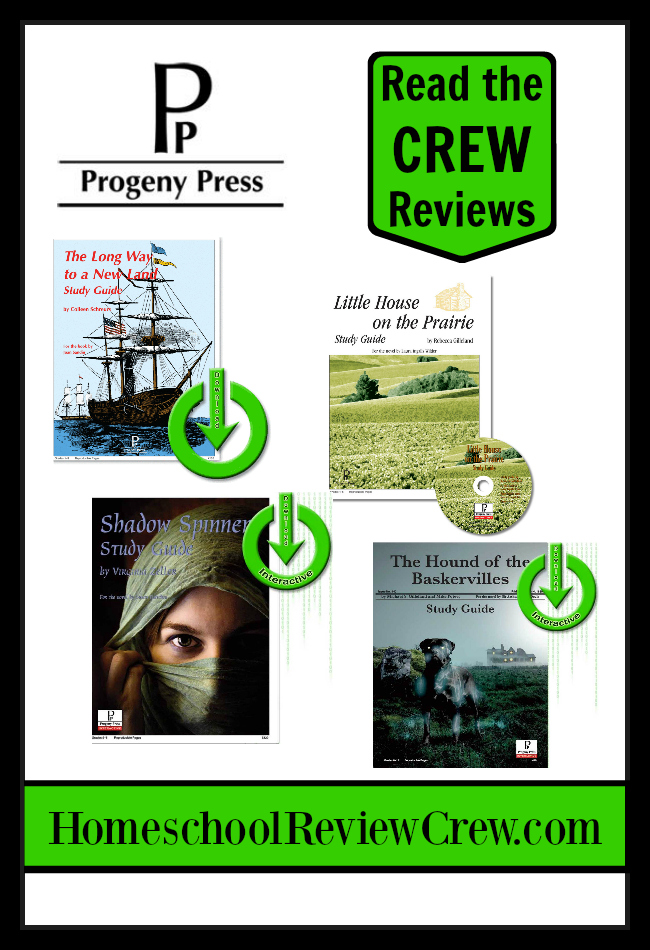
Progeny Press is a company that we have become very familiar with in our household over the last few years, as they are known for providing high quality literature guides for a wide variety of classical literature for all grade levels.  Recently, we were given the opportunity to review two more study guides in our classroom - Little House on the Prairie Study Guide  and Shadow Spinner Study Guide .  


Our review will mostly focused on the study guide for Little House on the Prairie because that was the guide that we worked with first and was able to complete the entire study from start to finish.  However, we began working on the Shadow Spinner study guide after completion of the first guide and have gotten a few weeks into it at this point as well. 

Both of these guides were given to us as digital download PDF files.  Each study guide consisted of two files - the interactive study guide itself as well as a separate answer key.  A physical copy of the guide as well as a physical CD of the file is also available for purchase from the Progeny Press website.


About Progeny Press

Progeny Press is a publishing company who offers E-guides for literature with a Christian perspective. Offering guides for reading levels from early elementary through high school, each of the Progeny Press guides are designed to help students to better understand the story they are reading as well as to recognize the themes presented by the author. The units contain study questions as well as recommended map work, research ideas, vocabulary lessons, and even Biblical verses that tie into the story.

However, what makes Progeny Press different from other literature study guides is that Progeny Press uses Biblical teachings, backed with scripture, to tie the story into practical lessons. While many books contain content or beliefs that do not align with Christian beliefs, Progeny Press guides direct students to instead study what God says about such things so they will be better prepared and strong in their faith when they face such behavior, language, and philosophy in life. 


Using Progeny Press in our Homeschool

We were offered two different literature study guides to use in our school.  We selected Little House on the Prairie Study Guide and Shadow Spinner Study Guide.  Both of these guides are listed as being "Interactive" files, which means that they can be opened using Adobe Reader on a computer and the student has the ability to enter their answers directly into the file and save their work to the computer, or the teacher can choose to instead print out the study guide as a handout for the student to write out their work.  For this review, we decided to try both methods - we printed out the study guide for Little House on the Prairie and for Shadow Spinner, I decided to allow Garrett to type out his answers and print out a hard copy of his work once he finished each section.


Ashleigh's Notebook with copies of both of her study guides inside

We immediately started with the Little House on the Prairie Study Guide.  This is a 62 page PDF guide to be used while reading the book of the same name by Laura Ingalls Wilder and is designed to be used with grades 4th-6th.

Each week, the guide would recommend a set amount of reading for the students to complete.  We read the book selections aloud for our morning time each morning.  What typically worked best for us during this particular guide was to read 2 chapters a day for three days (the reading for Little House on the Prairie typically required 5-6 chapters a week) and then for the last two days of the week we would work on the questions together during our discussion time.  Suggested activities were then scattered throughout the lessons  where they would fit in best  - for example, listening to the songs Pa would sing at night worked well while reading that portion of the chapter.

Luckily Picket doesn't understand English and our reading about stewed Jack Rabbit with dumplings and gravy.

Following the suggested reading, the study guide followed a pretty general format.  The first activity included some sort of vocabulary exercise, such as determining a word's meaning based on the context it was used in or looking up the actual definition.   Vocabulary exercises were followed by a series of questions that progressively require more from the student as they completed them.  The first set are simple comprehension questions that could be answered straight from the reading.  A second set of questions then asked students to use deductive reasoning skills to answer questions that weren't as straight forward as the comprehension questions - such as what they think a character might have meant in saying something in particular or comparing their own lives to that of the characters. A final third set of questions - the "Dig Deeper" section of questions - uses situations found in the book and asks the student to read a passage of scripture and find a correlation between the two.


In addition to vocabulary and questions, there are also suggested projects and activities that can be done to help with enrichment.   This section offers a wide variety of activities that fall into a large array of categories.  One activity gave a recipe to make cornbread from scratch (something we do often in our home) while another activity had the children make a list of Charities that they can make a gift to this holiday season.  A few activities that we included with our reading was using Lincoln Logs to build a log cabin, listening to recordings of wolves howling at night, and listening to recordings of fiddle music of some of the songs mentioned in the reading. 


Garrett's Log Cabin out of Lincoln Logs

Listening to some of the fiddle selections that Pa played in the book. 

Working on questions following a chapter in the book

After finishing The Little House on the Prairie, we then began reading the book Shadow Spinner by Susan Fletcher.  The PDF study guide for this selection is written for grades 5th-8th and is 103 pages in length (89 pages for the guide and the 14 page answer key).


As this study guide is for middle school students and requires more writing then the previous study guide,  I opted for Ashleigh to use a printed version that she could write on while I allowed Garrett to work on the computer to type his answers.   The PDF allows for Garrett to fill in the answers using a reader program, save his work and then we can print out his work and put it in his binder.  


Garrett gets rather frustrated with writing, especially with longer writing, so being able to type has been a blessing for him.  Granted, I do catch him using shortcuts in order to do his definitions, but he's happily completing the work. 


This particular study goes deeper into studying literary tools that are used by the writer throughout the book, such as foreshadowing, juxtaposition, alliterations and such.  Where as the Little House on the Prairie study had various activities, because this study is for older grades, it focuses more on learning these literary tools in addition to vocabulary and comprehension questions.


We have always enjoyed using Progeny Press study guides in the past and the older the kids get, the more they seem to appreciate these guides.  I especially enjoy the large selection of guides that are offered, especially for older grades, as well as the Christian perspective the guides give (the Dig Deeper section really provides an opportunity for students to see how scripture gives an understanding for our lives beyond the pages of the Bible).  


#hsreviews #literature #homeschool #unitstudies #reading #english #criticalthinking #ilovebooks #progenypress

For more information about Progeny Press and their various literary guide offerings in addition to the two guides that we reviewed, be sure to visit their website.  You can also find them on the following social media sites:


Members of the Review Crew were given their choices of four study guides, one for each level of schooling (Early Elementary, Late Elementary, Middle School and High School).  Be sure to click on the banner below for the opportunity to read their reviews today.

Study Guides for Literature {Progeny Press Reviews}


Disclosure

Disclosure
Related Posts Plugin for WordPress, Blogger...